Endless Hot Water Without Storage Limits
Tankless Water Heater Services in Parsippany for properties that exhaust tank capacity during peak demand periods
Properties with high simultaneous hot water demand face a fundamental limitation with traditional tank systems: once the stored volume depletes, users wait for the tank to reheat before hot water becomes available again. Tankless systems eliminate this constraint by heating water on demand as it flows through the unit, which means the supply continues as long as fixtures remain open and the unit can keep pace with flow rate. Drainiacs Plumbing and Heating installs, repairs, and maintains tankless water heaters throughout Parsippany for both residential properties seeking space savings and energy efficiency, and commercial facilities requiring continuous hot water without interruption. The technology works differently than storage tanks and requires proper sizing, adequate gas supply or electrical capacity, and regular maintenance to prevent mineral buildup from affecting performance.
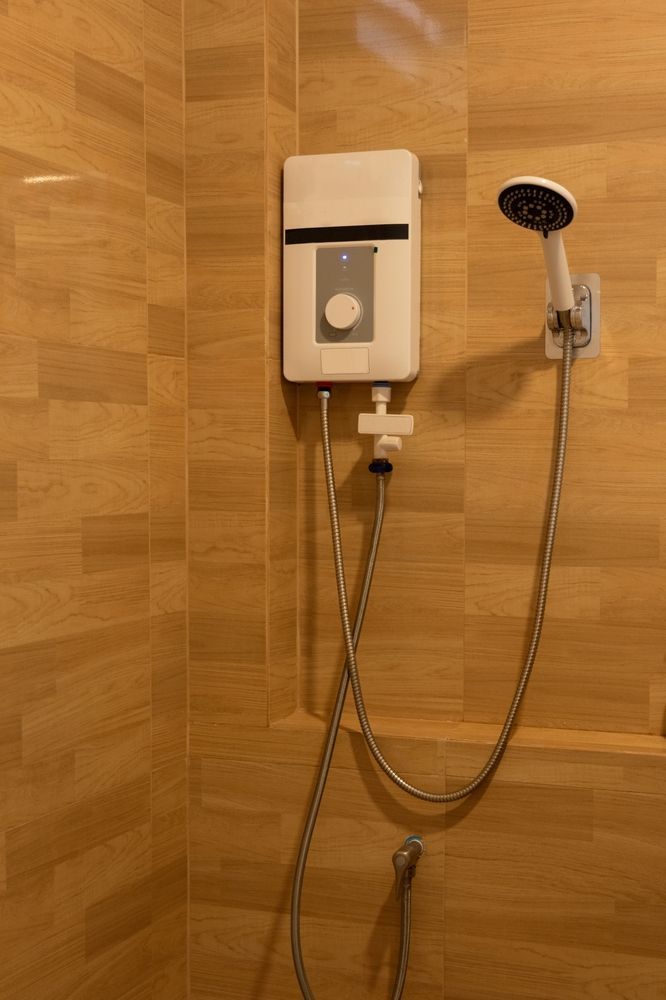
Installation involves mounting the compact unit on a wall, running dedicated gas lines or electrical circuits sized to meet the unit's demand, venting combustion gases if using a gas model, and sometimes installing water softening equipment in areas with hard water to protect the heat exchanger from scale accumulation. Annual descaling removes mineral deposits that reduce efficiency and restrict water flow through the narrow passages where heating occurs.
Request a consultation to determine whether your property's infrastructure can support a tankless system and what capacity you need based on simultaneous fixture use.
Why System Sizing and Maintenance Matter
Tankless units are rated by maximum flow rate measured in gallons per minute and the temperature rise they can achieve at that flow, which means a unit that works well for a small household will fail to keep up if undersized for a larger property running multiple showers, dishwashers, and washing machines simultaneously. Gas models require larger gas line diameter than standard tank heaters, and electric models often need electrical panel upgrades to handle the substantial amperage draw. Hard water accelerates scale formation inside the heat exchanger, which acts as insulation and forces the unit to work harder while delivering less hot water.
After installation, you will notice that hot water arrives at fixtures without the delay caused by water sitting in a tank cooling between uses, your utility bills reflect energy savings from heating only what you actually use rather than maintaining a full tank at temperature constantly, and floor space previously occupied by a large tank becomes available for other purposes. The unit itself fits on a wall and takes up minimal room compared to traditional forty or fifty-gallon tanks.
These systems require annual maintenance that includes flushing with descaling solution to remove mineral buildup, cleaning inlet screens that trap sediment, and verifying that the unit achieves proper temperature rise across its flow range. Neglecting this maintenance voids most warranties and leads to premature heat exchanger failure in hard water areas.
Common Questions About This Service
Homeowners and commercial property managers considering tankless systems often need clarity on how the technology differs from familiar tank-based heating and what ongoing requirements it involves.
What flow rate does a tankless system need to provide?
Calculate total gallons per minute by adding all fixtures that might run simultaneously, such as two showers at 2.5 GPM each plus a dishwasher at 1.5 GPM, which requires a unit rated for at least 6.5 GPM at your desired temperature rise.
How does hard water in Parsippany affect tankless heaters?
Mineral-heavy water creates scale deposits inside the narrow heat exchanger passages faster than in open tank systems, which reduces efficiency and eventually blocks flow if not flushed annually with descaling solution or prevented with water softening equipment.
Why do some tankless units fail to deliver hot water consistently?
Undersized units cannot maintain temperature when flow exceeds their capacity, and units with clogged heat exchangers or dirty inlet screens restrict water movement and trigger safety shutoffs that interrupt heating.
When does switching to tankless make sense financially?
Properties with high daily hot water use, available wall space but limited floor area, natural gas service with adequate supply capacity, or frequent complaints about running out of hot water during peak periods see the clearest benefit from conversion.
What happens during annual maintenance?
The service includes circulating descaling solution through the heat exchanger to dissolve mineral buildup, cleaning sediment screens, testing ignition and flame sensors on gas models, and verifying output temperature across different flow rates to confirm the unit performs to specification.
Drainiacs Plumbing and Heating evaluates existing gas line capacity, electrical service, and water quality before recommending specific tankless models to ensure the system will perform reliably after installation. Call our team to discuss whether your property's infrastructure supports tankless conversion and what modifications might be necessary.