Hot Water When Your System Fails
Water Heater Installation & Repair in Parsippany for tank leaks, inconsistent heating, and complete system failures
Tank water heaters in Parsippany homes typically fail in one of three ways: the heating element stops functioning and produces only cold or lukewarm water, the tank develops a leak from internal corrosion and drips or floods the surrounding area, or sediment buildup reduces capacity and causes the system to run out of hot water faster than it should. Drainiacs Plumbing and Heating handles both emergency repairs when systems fail unexpectedly and planned replacements when routine maintenance reveals a tank nearing the end of its functional lifespan. Residential and commercial properties depend on consistent hot water for daily operations, and a failed heater disrupts everything from morning routines to business functions.
Repair work addresses specific component failures such as faulty thermostats, burned-out heating elements, malfunctioning pressure relief valves, and ignition problems in gas units, while installation involves removing the old tank, upgrading supply lines and venting if required by current code, and sizing the new unit to match actual household demand. Routine flushing removes sediment that settles at the tank bottom and insulates water from the heat source, which forces the system to work harder and shortens component life.
Arrange an inspection if your water heater produces inconsistent temperatures or shows any signs of moisture around the base.
What Proper Installation Requires
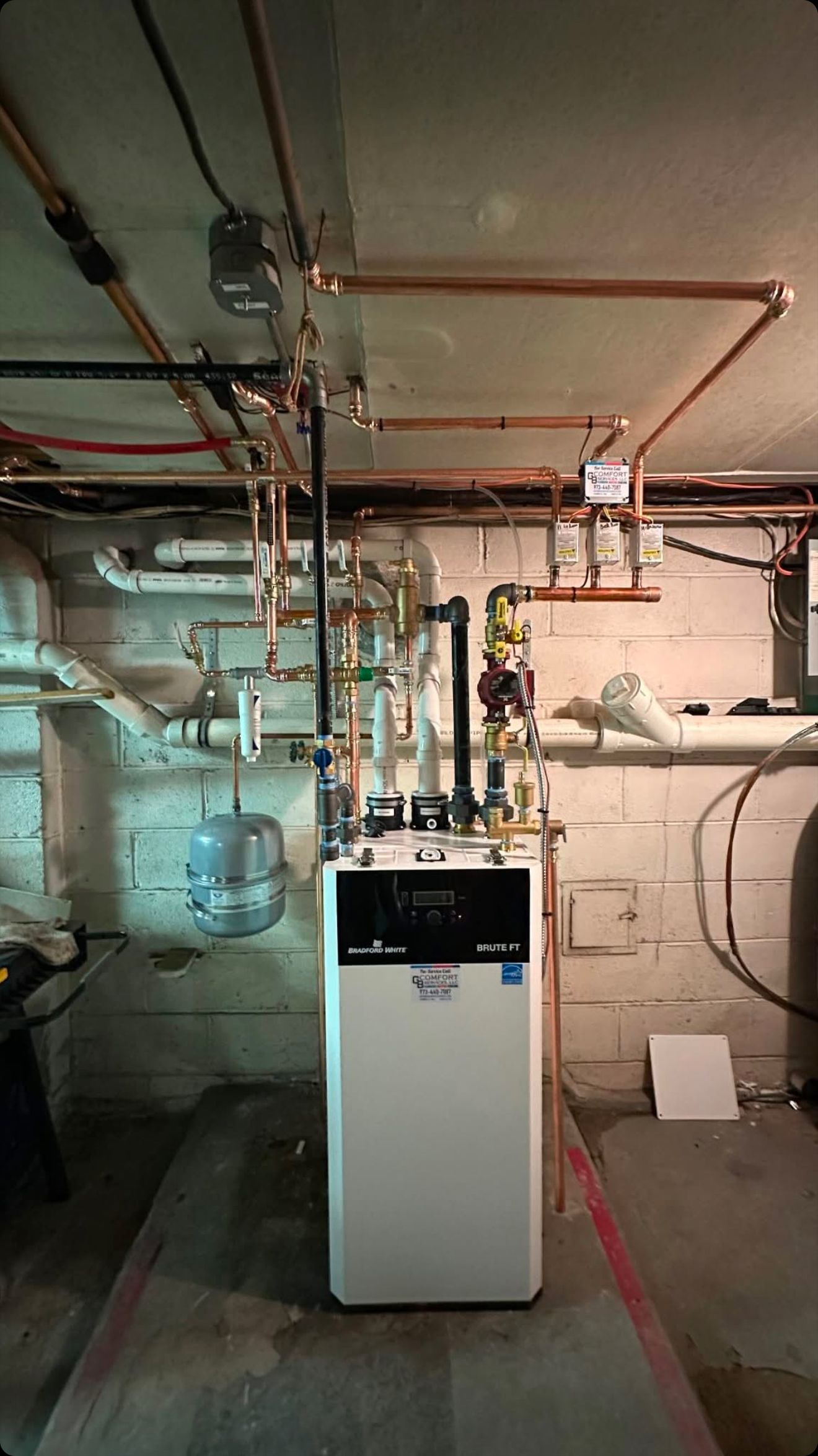
Installing a traditional tank water heater involves more than connecting supply lines and turning on the power. The unit must sit level on a solid surface or drain pan, the temperature and pressure relief valve must discharge through proper piping that terminates safely, gas venting must meet combustion air and exhaust requirements, and electrical connections must match voltage and amperage specifications. Undersized units run constantly and fail prematurely, while oversized tanks waste energy heating water that never gets used.
Once installation is complete, you will have water that reaches the set temperature consistently across all fixtures, a system that recovers quickly after heavy use periods, and no unusual noises such as popping or rumbling caused by sediment boiling at the tank bottom. Drainiacs Plumbing and Heating sizes replacement tanks based on household occupancy and peak usage patterns rather than simply matching the old unit's capacity, which may no longer suit current needs if family size or water use has changed.
Energy-efficient models with improved insulation and higher recovery rates cost more initially but reduce monthly utility expenses and qualify for rebates in some cases. Annual maintenance that includes flushing sediment, testing the relief valve, and inspecting the anode rod extends tank life and maintains efficiency.
Questions Before Starting Your Project
Property owners in Parsippany often face decisions about whether to repair an aging water heater or replace it entirely based on the unit's age and repair cost.
How long do tank water heaters typically last?
Most residential tank units function reliably for eight to twelve years depending on water quality and maintenance frequency, with hard water areas experiencing shorter lifespans due to accelerated sediment accumulation and internal corrosion.
What causes water heaters to leak?
Internal tank corrosion eventually creates pinhole leaks or cracks that cannot be repaired, which happens when the sacrificial anode rod depletes completely and no longer protects the steel tank lining from mineral contact and rust formation
When should I repair versus replace my water heater?
Units under six years old with component failures such as thermostats or heating elements usually justify repair costs, while systems older than ten years with major issues often cost less to replace than to repair given the likelihood of additional failures soon after.
Why does my hot water run out faster than it used to?
Sediment buildup at the tank bottom displaces water volume and insulates the remaining water from the heat source, which reduces effective capacity and forces the system to work harder to maintain temperature.
What size water heater does my home need?
Household size, simultaneous fixture use, and appliance demands determine capacity requirements, with typical homes needing forty to fifty gallons for two to three occupants and fifty to eighty gallons for four or more people with high hot water use.
Drainiacs Plumbing and Heating provides emergency repair service when water heaters fail without warning and leave properties without hot water. Contact our office to discuss replacement options or schedule a repair evaluation based on your current system's condition and performance issues.